

Trade tensions, particularly those between the U.S. and Canada, are introducing new layers of complexity into the business landscape. Tariffs, shifting supply chains, and unpredictable policy decisions are causing many business owners to rethink not only how they operate—but how they exit.
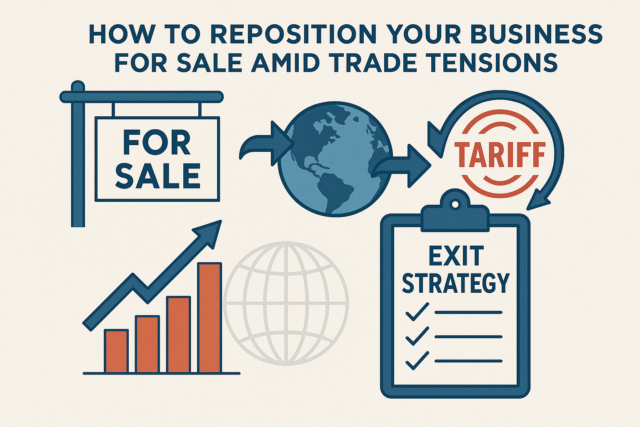
If you’re planning to sell your business in the next 12–24 months, you need more than a strong bottom line. You need a strategy that reflects the current climate, demonstrates resilience, and gives buyers confidence—even when the market feels uncertain.
Here’s how to reposition your business for sale in a way that aligns with today’s economic realities—and tomorrow’s opportunities.
-
Identify and Address Trade-Related Vulnerabilities
Buyers want clarity. If your business is exposed to trade-related risk—like dependency on U.S. imports, currency fluctuations, or tariff-sensitive pricing—make that transparent. But don’t stop there.
Action Steps:
- Document how trade tensions have affected your operations.
- Show steps you’ve taken to mitigate those risks—like sourcing diversification, contract renegotiations, or operational pivots.
- Highlight opportunities created by the shifts, such as emerging local suppliers or new markets outside the U.S.
A business that has adapted under pressure often appears stronger and more appealing to strategic buyers.
-
Recast Your Financials with Context
Trade tensions can cause short-term revenue dips or margin fluctuations. Rather than let those moments hurt your valuation, use them to tell a larger story.
Action Steps:
- Work with your advisor or accountant to normalize earnings, showing buyers what your performance looks like without one-time tariff-related hits.
- Add context around unusual line items—such as sudden cost increases or temporary losses—so they’re not mistaken as systemic issues.
- Forecast conservatively, but back it up with well-reasoned assumptions tied to macroeconomic factors.
This level of transparency signals to buyers that your business is not only resilient but also professionally managed.
-
Highlight Your Competitive Positioning
During times of economic strain, buyers are especially drawn to businesses with clear differentiation and loyal customer bases.
What to Emphasize:
- Customer retention and recurring revenue
- Local supplier relationships that reduce cross-border risk
- Proprietary processes or IP that offer protection from commoditization
- Ability to pivot or innovate in response to market shifts
Even small businesses can show outsized value if they occupy a strong niche and demonstrate agility.
-
Clean Up Operations and Documentation
Trade uncertainty should not become an excuse for operational messiness. In fact, it’s the perfect time to streamline and get sale-ready.
What to Tidy:
- Contracts and supplier agreements
- Inventory and logistics systems
- Compliance with new trade regulations
- Business continuity plans in the event of further disruptions
Buyers will want to know your business can handle curveballs—and that it’s ready for a clean transition.
-
Reframe the Narrative
A business for sale isn’t just a financial entity—it’s a story. And during times of tension, the narrative matters more than ever.
Your story should answer:
- Why is this business still standing when others are struggling?
- What makes it valuable in a changing trade environment?
- What upside does a buyer inherit, especially once tensions ease?
This positioning is especially important if you’re targeting strategic acquirers who understand the long game.
-
Engage the Right Advisors Early
Repositioning a business for sale—especially during economic headwinds—requires more than just good intentions. It takes experience, foresight, and access to a network of buyers who can see value in complexity.
That’s where working with a trusted M&A advisor comes in.
Firms like Robbinex specialize in helping business owners not only exit, but exit strategically. With deep experience in valuation, restructuring, and buyer matchmaking, a seasoned advisor can help you turn trade turbulence into a tailored selling strategy that speaks to today’s buyers.
Final Thought: The Best Time to Prepare Was Yesterday — The Next Best Is Now
Trade tensions are unpredictable, but your response to them doesn’t have to be. If you’re thinking about selling in the next few years, don’t wait for the “perfect” market. The strongest exits happen not because the market is calm—but because the business was ready.
By taking steps now to reposition your company—financially, operationally, and strategically—you’ll stand out in a crowded market. And in uncertain times, that kind of preparation is not just a value add. It’s a competitive edge.

